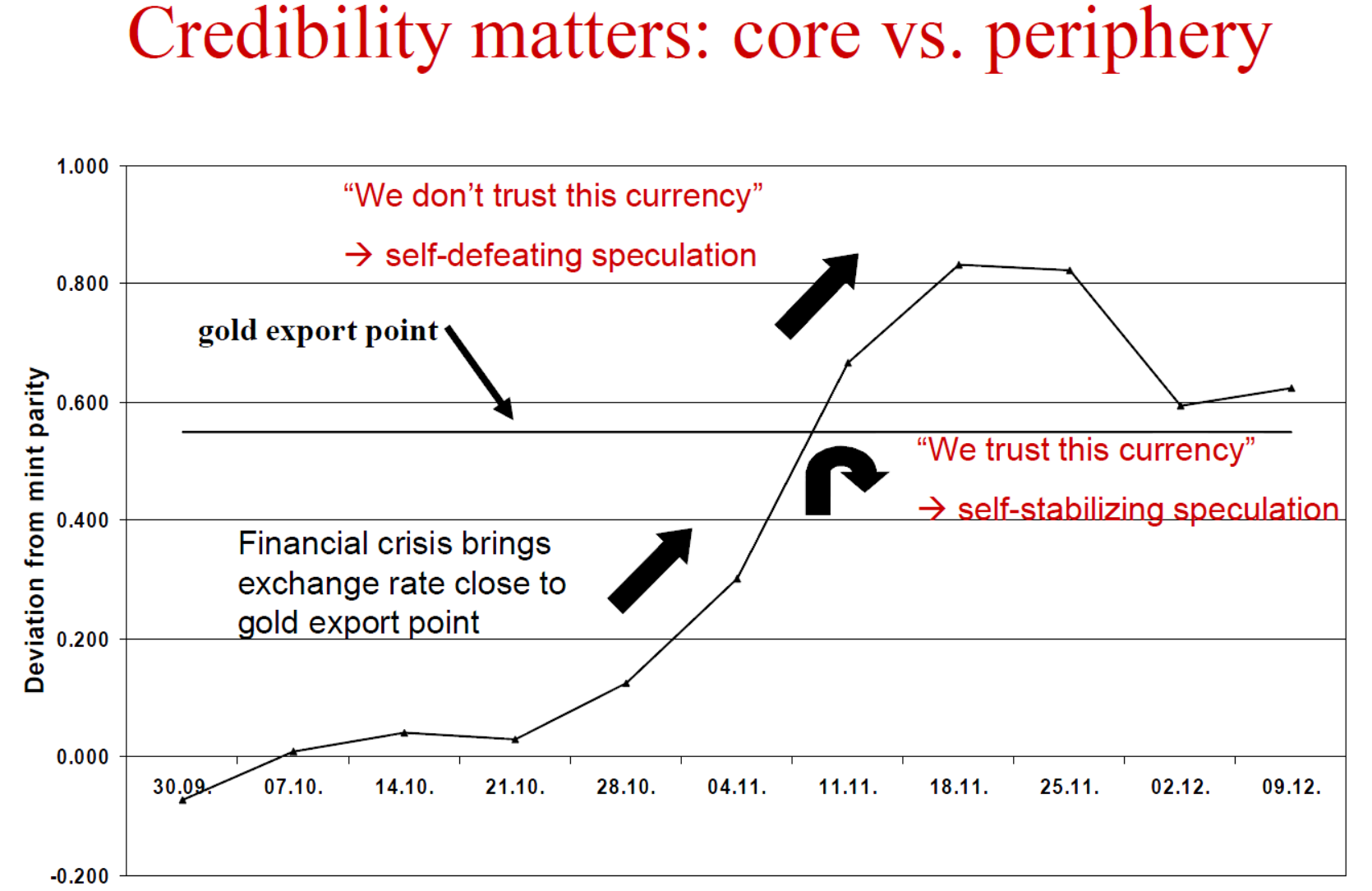
Before 1913
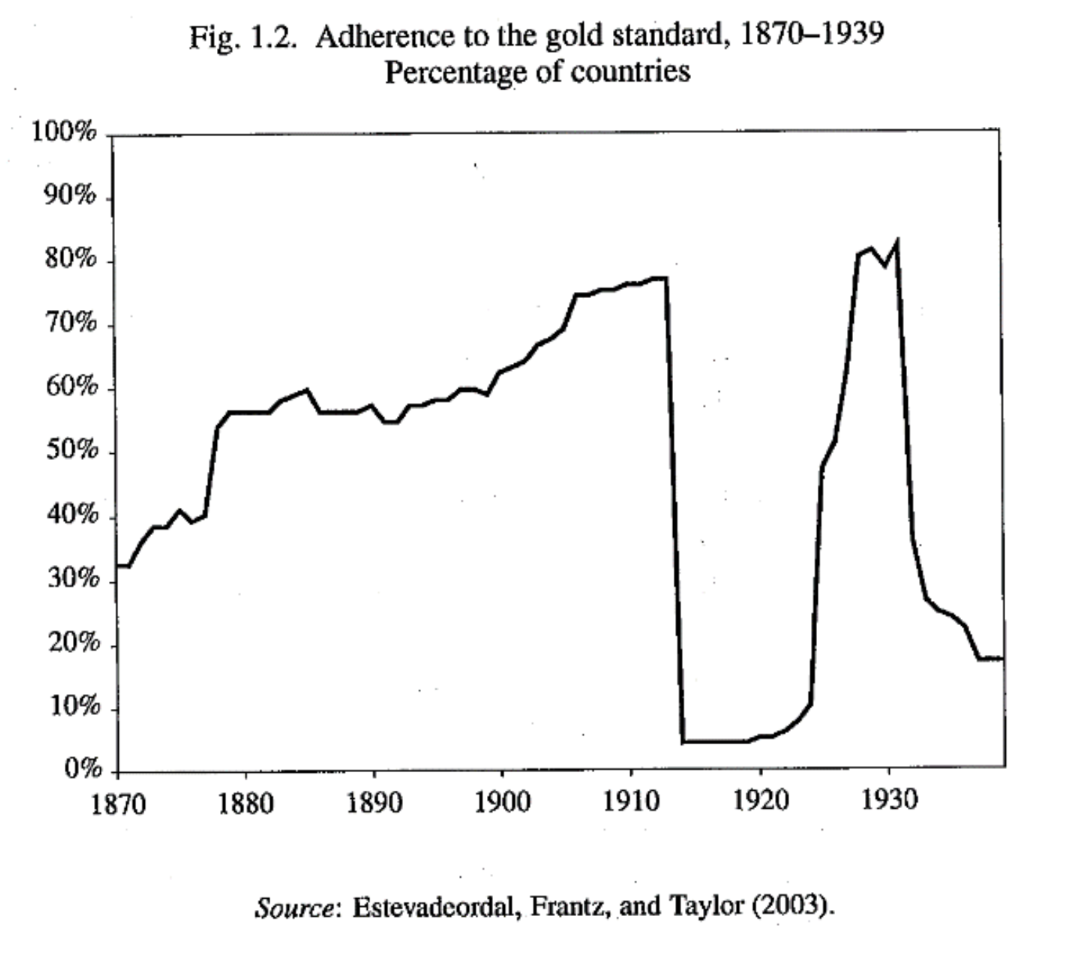
- most money was commodity → week 1
- money was matching gold/silver prices
- printing of paper money
- started in UK, second in Germany
- countries trading with UK, DE switched to gold standard eventually
- fixed exchange rate - lower transaction cost
- legally fixed minting rate
- fixed mint parity - how many coins are 1kg of gold
- also fixed between countries
- minimum ratio between deposits and circulation
- gold still freely tradeable
Implications/Requirements
- no money printing of peripheral countries → no Fiscal Dominence
- became “seal of approval” for peripheral countries for not doing any shady money-business
- liberal politics → prices and wages very flexible
- unemployment no large political issue
- prohibition of labor unions
- long period of peace helped in forming contracts and made coordination easier
Self Stabilizing Mechanisms
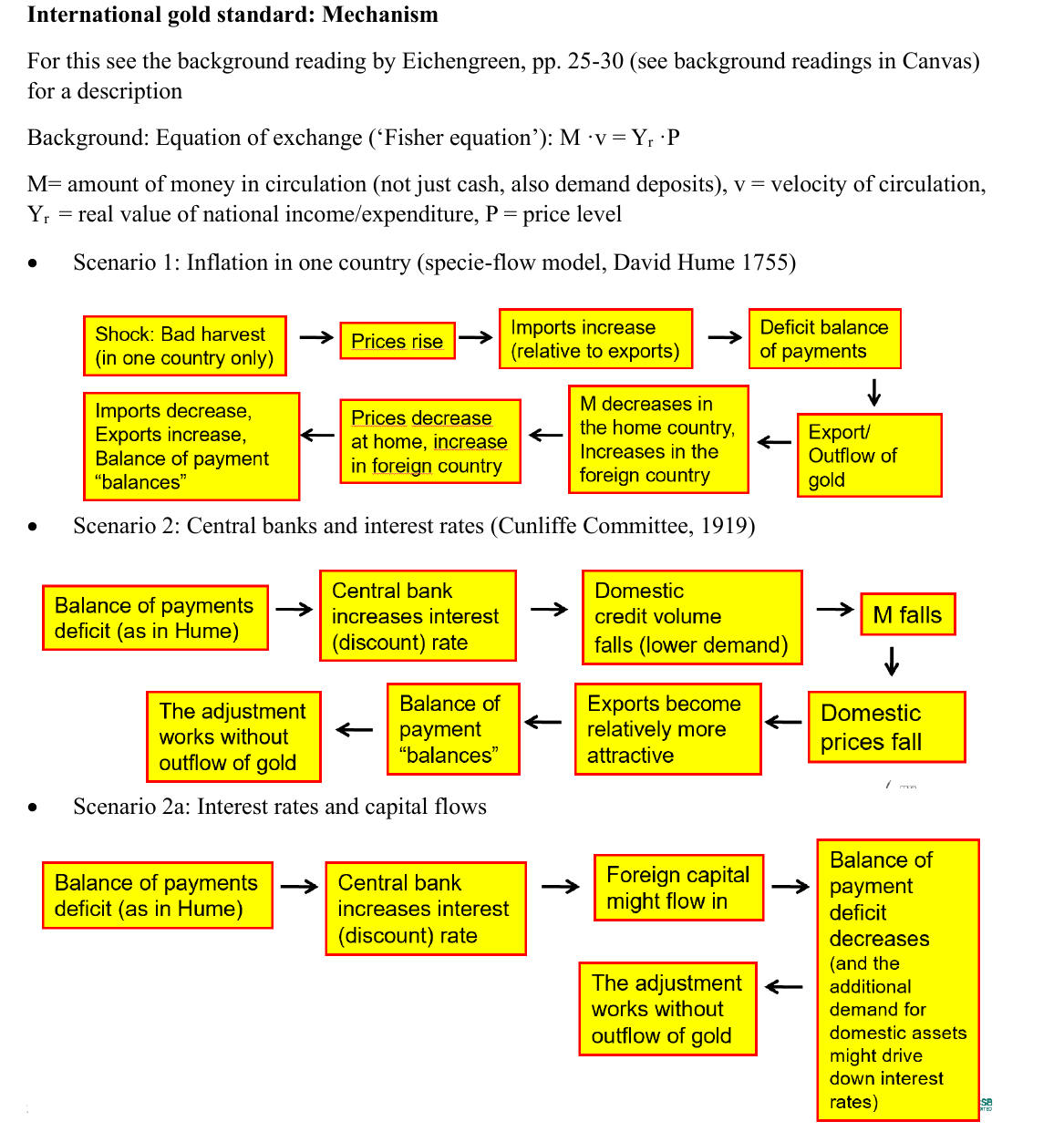
Credibility Matters