Scopes
Scope 1
- direct emissions
- directly caused by company by burning of fossil fuels
- e.g. steel production, company cars, combustion generator in the basement
Scope 2
- direct energy consumption
- e.g. electricity consumption, Fernwaerme, cooling, steam
Scope 3
- indirect emissions
- scope 3 cannot be calculated directly
- information has to be given from suppliers
- some suppliers don’t even have that data
Upstream
- purchased goods
- capital goods
- fuel and energy related activities
- waste generated in operations
- business travel
- employee commuting
- upstream leased assets
Downstream
- downstream transportation and distribution
- processing of sold products
- use of sold products
- e.g. company selling diesel generators
- end-of-life treatment of sold products
- important for electric cars
- downstream leased assets
- franchises
- investments
How they are important
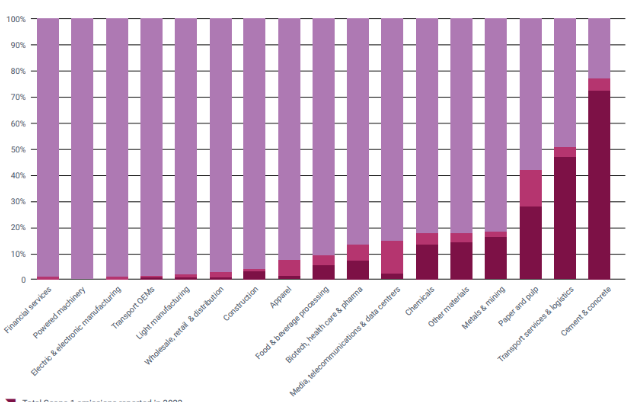
- most companies have high Scope 3 emissions
- therefore push to sustainability standards
But there is more than CO2
- reporting only done in CO2eq
- if there are other greenhouse gases (e.g. methane) they are translated into the equivalent CO2 amount
- multiply by global warming potential
- e.g. currently x27 for methane CH4, x273 for nitrous oxide N2O
- they are added up to be just 1 CO2 amount
- possible to have 0 actual CO2 emissions but still report high CO2 emissions which are translated methane