Definition Memory
Memory refers to the psychological processes of acquiring, storing, retaining, and later retrieving information. There are three major processes involved in memory: encoding, storage, and retrieval.
Usually, “memories” tends to refer to events recalled from the past, which are seen as more representational and subjective. In contrast, “memory” now is used to refer to the storage of information in general, including in DNA, digital information storage, and neuro-chemical processes. Today, science has moved far beyond a popular understanding of memory as fixed, subjective, and personal. In the extended definition, it is simply the capacity to store and retrieve information.
- Information which is stored by you to be retrieved later
- can be on your computer or your genes too
- without memory one cannot live
- recognizing locations and people
- how to move
Biology
- special neurons called Engram
- built by strengthening synapses when recalling a memory
- mimicry of original experience
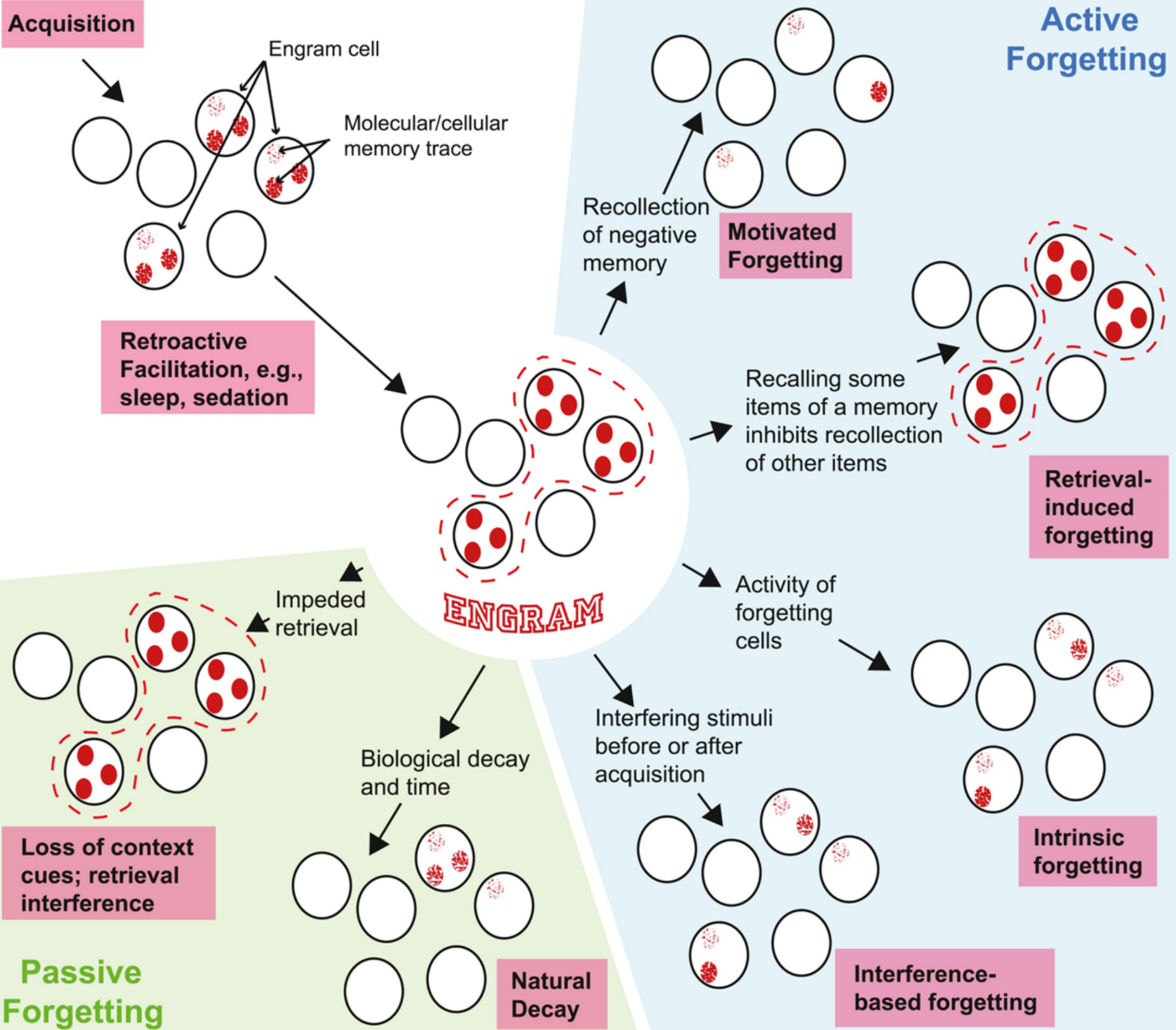
- mimicry of original experience
Working Memory Model
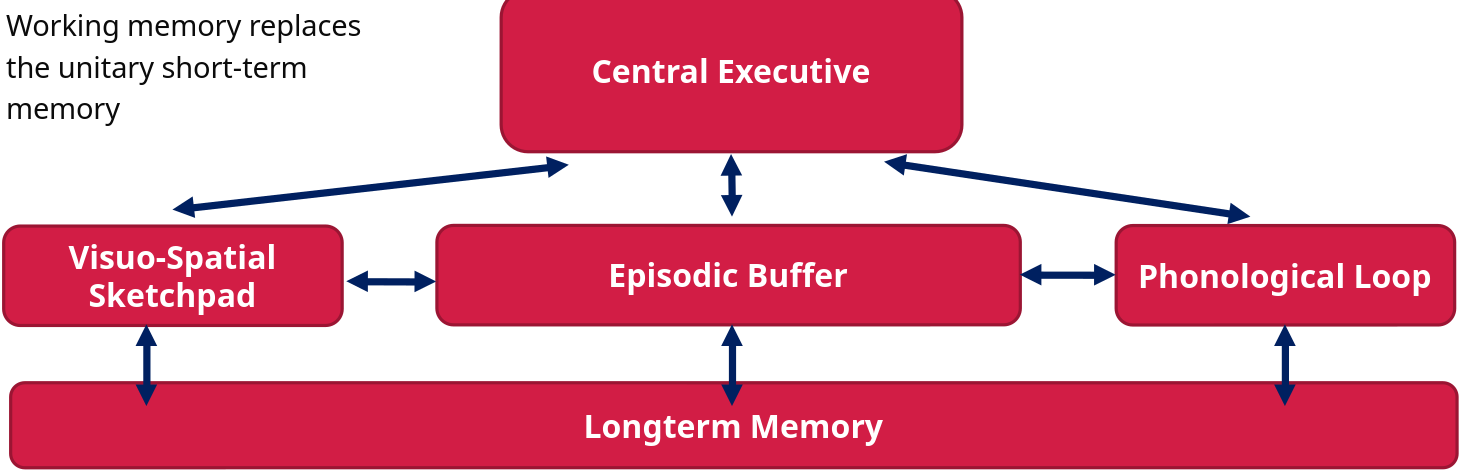
- model replaces classic “short-term memory”
- goal is getting everything into long-term memory
- mostly effortful, there are tricks
- working-memory takes effort
- all of those parts can be blocked/suppressed
- central executive
- what to pay attention to?
- multitasking also done here
- CPU/scheduling tasks
- demanding tasks
- e.g. chess
- what to pay attention to?
- visuo-spational sketchpad
- close your eyes, imagine an apple
- anything visual or spacial (playing minecraft)
- phonological loop
- the “inner voice” when talking to yourself or reading
- speech recognition when listening
- articulating own speech
- phonological similarity effect
- easier to remember phonetically dissimilar words than similar words
- word-length effect
- capacity of phonetic loop is limited by time it takes to pronounce (not amount of letters)
- articulatory suppression eliminates this effect
- episodic buffer
- “does everything not done by the others”
- limited capacity - 4 chunks
- buffer for PL, VSSP, perception, long-term memory
- active information integration (combining information)
- explains how long-term influences short-term memory
- reason for a terrible theory
- eliminates a chance of falsifyability → Popper Logic
Organization
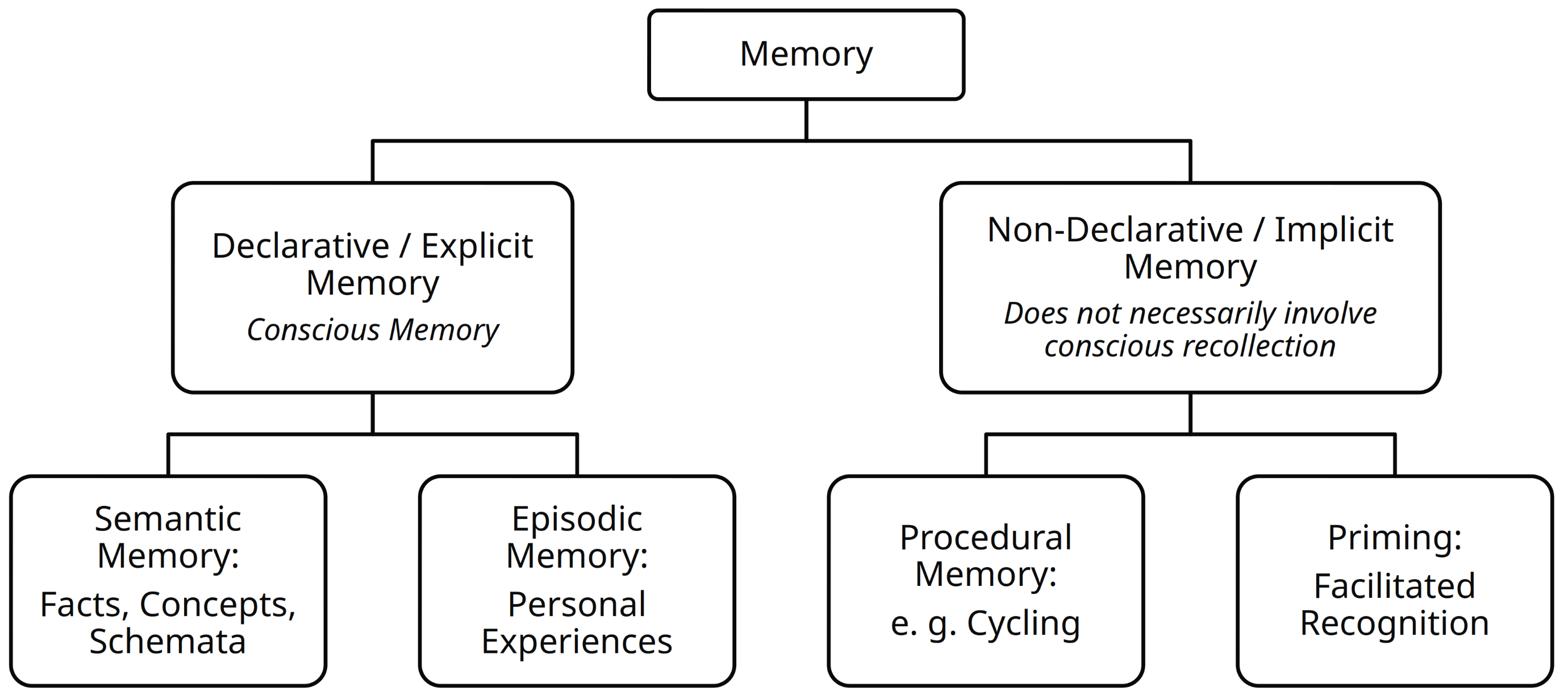
Declarative / Explicit
- episodic memory
- storage for facts
- e.g. how tall is a penguin?
- developed rather late in evolution
- kids get it later than other capabilities, elderly lose it quite early
- storage for facts
- semantic memory
- general knowledge
- e.g. language, what a penguin looks like
- unlimited capacity
- BUT we don’t learn everything we see
- BUT we cannot retrieve everything
- applications
- learn a new language
- study for an exam
- general knowledge
Non-Declarative / Implicit
- procedural memory
- anything that happens without active thought
- e.g. cycling, walking, running, balance
- priming
- recognition
- e.g. bird vs cat
- when shown the bird first the bird parts of your brain are activated
- when then shown a cat with the outline of a bird the bird is seen
- when shown a cat first the cat is seen first with the second picture
- e.g. bird vs cat
- recognition