Globalization
Content
Why trade?
-
principle of comparative advantage
-
winners and losers of trade
-
trade, globalization and economic development
-
trade, globalization and inequality
-
trade, globalization and the environment
History
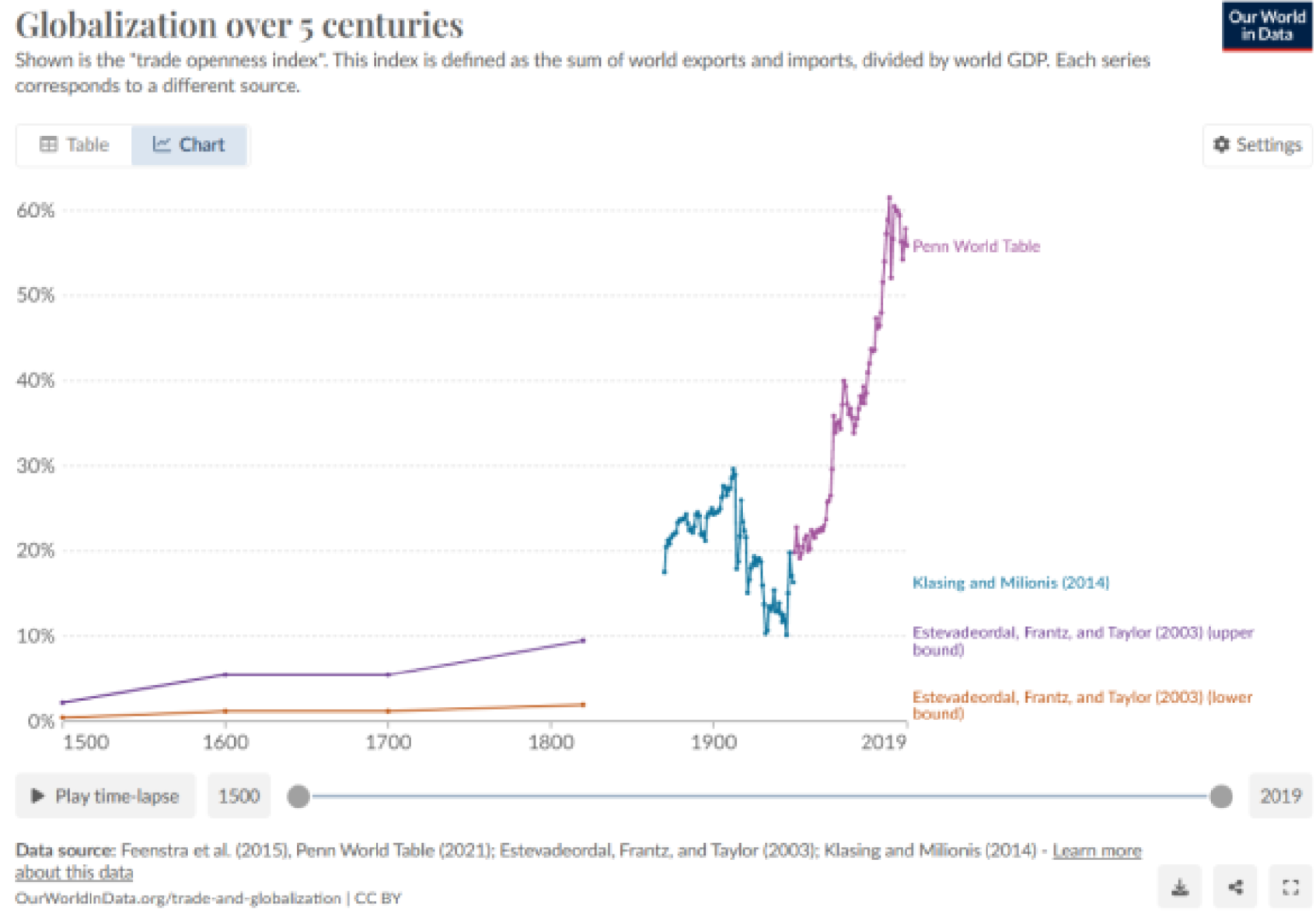
History of Globalization
- from ourworldindata.org
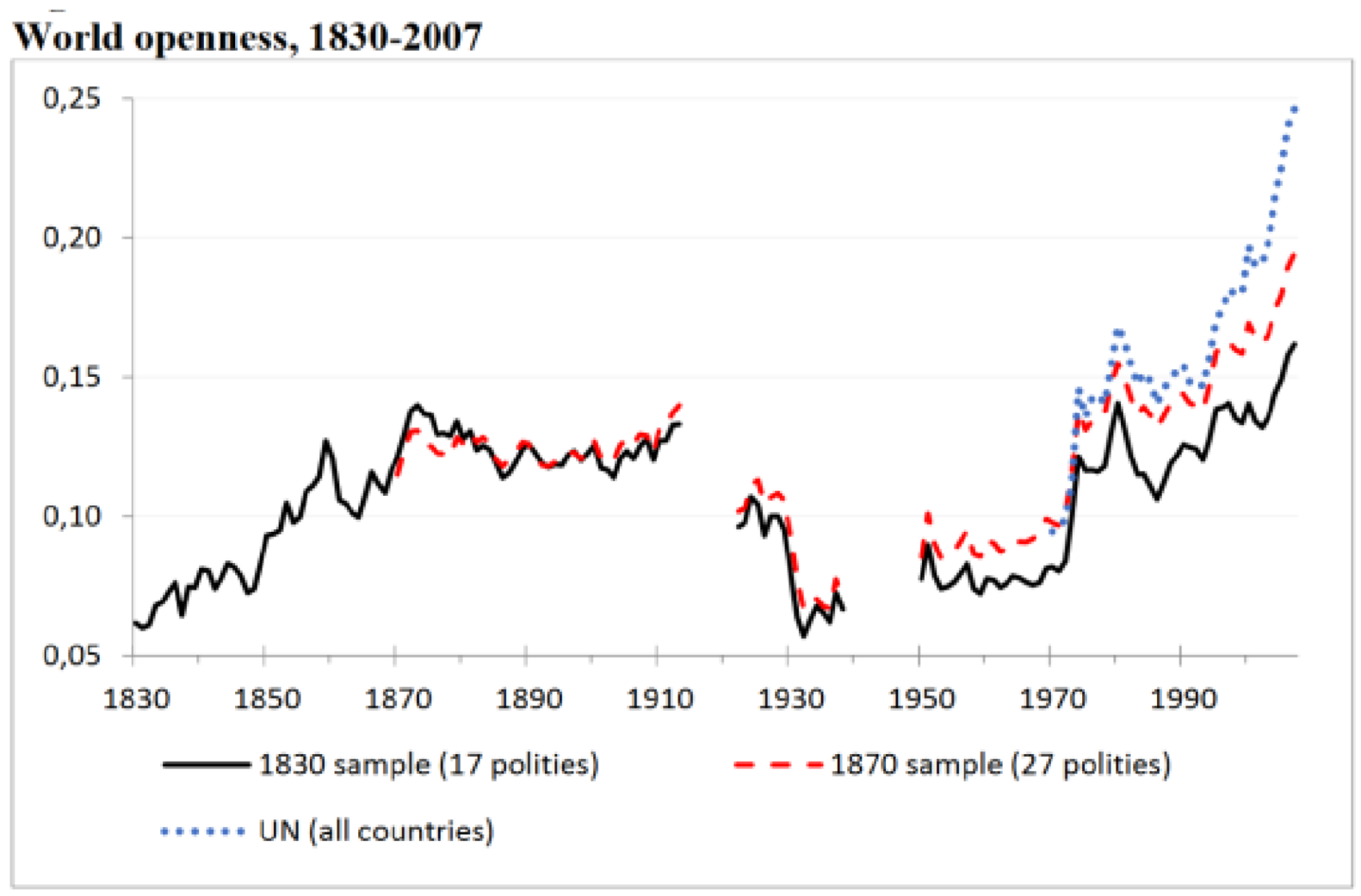
Openness
- Measurement of “Openness” of a country: Exports + Imports over GDP
Production Possibility Frontier
Principle of Comparative Advantage
- Mark can produce a lot of Meat
- Pete can produce a lot of Potatoes
Mark has an Absolute Advantage on Meat, Pete on Potatoes.
Mark should produce only Meat and Pete should only produce Potatoes. Then they can trade the excess.
There is a natural incentive for both Mark and Pete. They can, while splitting production and specializing, achieve previously unattainable amounts.
What if Mark is better at everything, has an Absolute Advantage on both Meat and Potatoes. btw, Production Frontiers can be nested within each other.
As long as you are relatively better (not absolutely better), you should specialize and engage in trade.
International Trade & Economic Development
wontfix get image from slides Countries that trade more are more likely to have a greater increase in GDP per capita. Form just this chart we cannot extrapolate the causality relationship; which cause causes which effect.
Critisism
wontfix get from slides
Winners and Losers of Trade
-
importing country: domestic consumer better off
-
exporting country: domestic consumer worse off
-
trade may produce winners and losers, even if the global economy benefits
-
benefits of trade
- increased variety of goods
- lower unit costs → economy of scale
- increased competition
- enhanced flow of ideas
-
trade may increase within-country inequality while generating economic growth