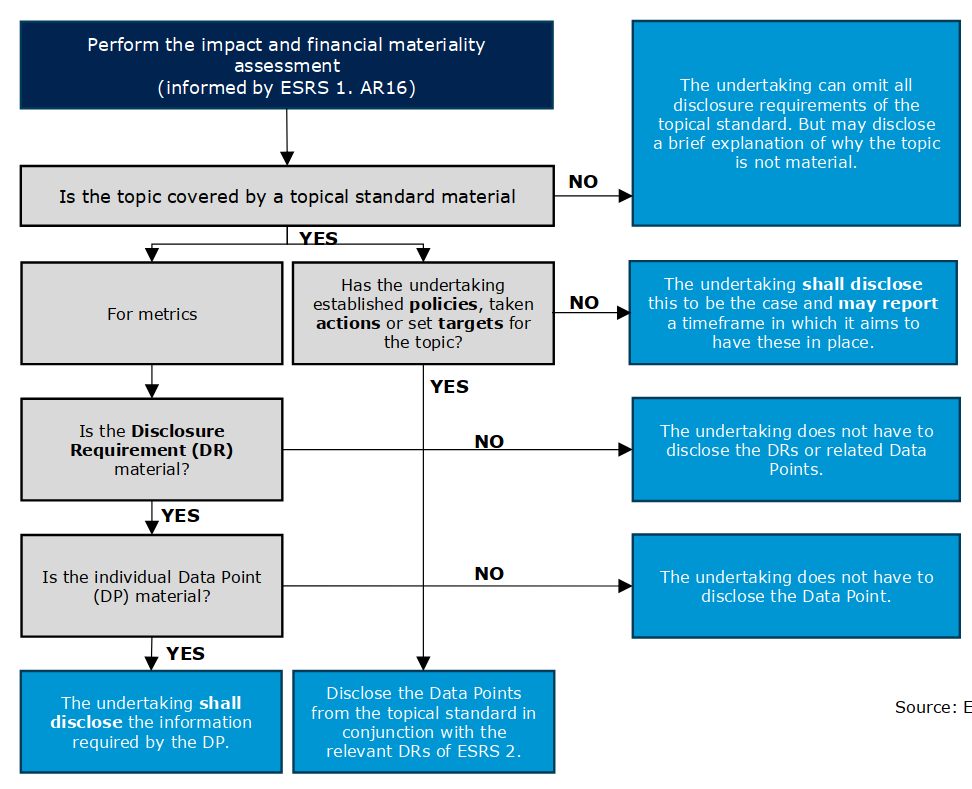
Basics
-
inputs
- water consumption
- working conditions
- data protection
- child labor
- microplastics
-
outputs
- materiality list company needs to focus on
-
not done every year
- business model does not change that quickly
- usually every 2 years
How To
1) Understanding Context
- stakeholders
- upstream / downstream stakeholders
- affected stakeholders
- employees, suppliers
- consumers, customers, end-users
- users of sustainability statements
- students, employees, investors, lenders etc
- Silent Stakeholders
- nature may be considered as silent stakeholders
- e.g. endangered species, minorities/cultures
2) Find IROs
- Impacts, Risks, Opportunities
- GROSS perspective
- analyse risks despite of interventions/measures
- e.g. flooding risk does not decrease bc I took measures for when a flooding happends
- breakdown by
- country, location or asset, subsidiary, sector
- sustainability matters
- Different standards
- E1, E2, E3 and their sub-points
- e.g. E2 pollution - first 4 might be material, last 4 might not be material
- also look at data points
- Different standards
- top-down vs bottom-up
- parent first, subsidiary later (top-down)
- subsidiary later, parent first (bottom-up)
- parent and subsidiary are different
- which materalities effect either group/parent or just individual subsidiaries
- e.g. holding company with many different companies/sectors
Stakeholder Engagement
-
how to ask/involve all/most stakeholders?
-
survey employees, consumers, banks, suppliers
- lot’s of surveys currently (Nov 2024)
-
interviews/group discussions
- with most important customers/suppliers
-
identify IROs based on that
-
integrate and prioritize matters
-
benefits: better Strategic Foresight and Scenario Planning capabilities
- better understanding of stakeholders and therefore better decisions
- not purely better for environment, but also for company itself
- also cheaper loans (Hummel/Jobst 2024 L3 p8)
3) Assess IROs
- score/rank IROs by stakeholder effect
- stakeholder engagement
- define thresholds
- which topics should you report on
- can be absolute or relative
- i.e. top 10 issues is critical vs everything above 100k risk is critical
- can be absolute or relative
- e.g. minimal, informative, important, significant, critical
- which topics should you report on
Decision Process or What to include?