Science Based Target initiative
General
- best practices
- technical assistance
- independent assessment and validation of targets
- reduce total GHG Emissions to 0 or residual level
Net Zero
- near-term (5-10 years)
- long-term (25 years)
- does not give the opportunity to offset any emissions
- goal is really to reach net-zero - not climate neutral
- residual emissions
- anything after long term goal needs to be offset by Emission Offsetting
- e.g. carbon capture
- permanently remove CO2eq from atmosphere
- anything after long term goal needs to be offset by Emission Offsetting
- beyond value chain
- investments outside of value chain to remove GHG Emissions
- reporting should be annual
- ambition levels by sector
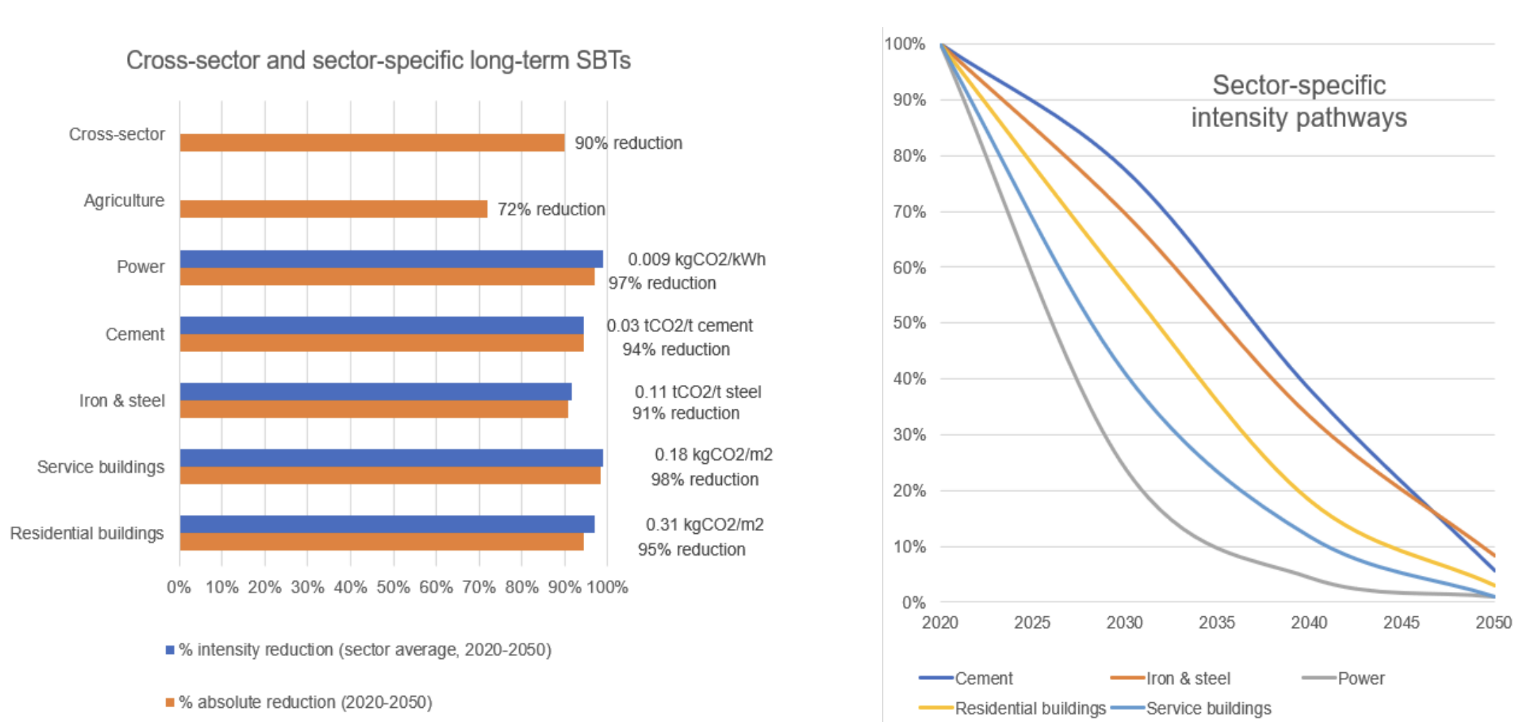
Ambitions
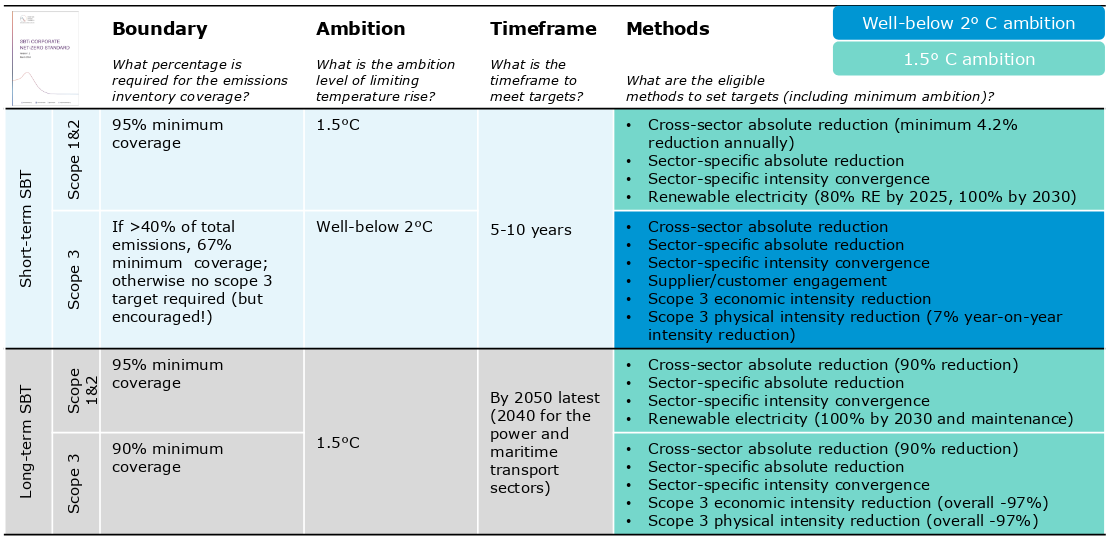
Signing Up
- select a base year
- GHG Emissions accurate and verifiable
- needs to be representative
- not earlier than 2015
- calculate emissions
- full GHG Emissions inventory
- GHG Protocol Standard
- set target boundaries
- near term at least 95% reduction in scope 1 and 2
- long term at least 90% reduction in scope 3 + near term goals
- residual with Emission Offsetting
- choose a target year
- near term - max 10y from submission date
- long term - max 2050
- calculate targets
- mitigation pathway and specific company inputs
- outputs of calculation … minimum requirements
Previous Notes
- company can submit their climate stats and their planned improvements
- they evaluate if their improvements and plans meet the Paris Agreement agreement
- they don’t help with the realization, just the setting of the goals
- SBTi can also provide people to help with setting these goals